
Email Marketing Software Buying Guide: Automation, Deliverability, Pricing, and Support
Navigating email marketing software can be tricky—automation, deliverability, pricing, and support all matter. Discover which factors truly impact your success.
Choosing the right email marketing software isn’t just about sending newsletters—it’s about automation, deliverability, pricing, and support working seamlessly for your goals. You need a platform that can grow with your audience, deliver emails that land in inboxes, and offer features that make your campaigns smarter. But with so many options, how do you know which factors should take priority for your success?
How to Choose the Right Email Platform for Growth and Budget
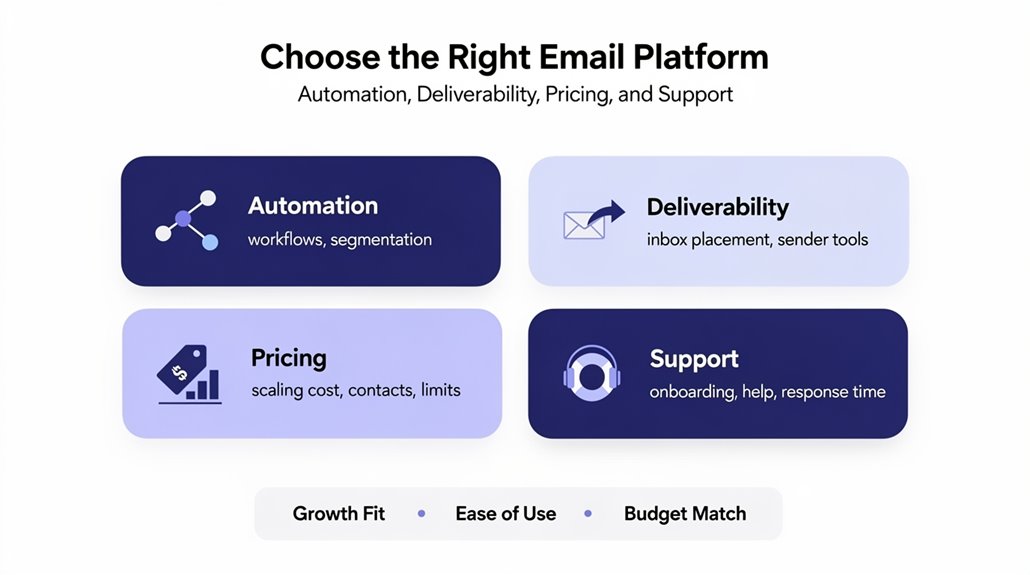
When picking the right email marketing platform for your growth and budget, you’ll want to focus on features like automation, segmentation, and customer journey builders that support personalized strategies. Different email marketing platforms come with varying automation capabilities and advanced segmentation options, so choose one that aligns with your marketing goals. Pricing structures vary widely, especially as your subscriber counts increase, so look for scalable plans that grow with your business without breaking the bank. Integrations are also essential; platforms like Klaviyo and HubSpot seamlessly connect with ecommerce and CRM systems, streamlining data flow. Don’t overlook a user-friendly interface—this guarantees a smooth onboarding experience but still allows you to customize your campaigns. Finally, reliable support can be a lifesaver when setting up complex workflows or migrating data. Platforms such as ActiveCampaign and Mailchimp often provide extensive resources and responsive customer service to keep you moving forward confidently. Most reputable platforms also include built-in compliance features for GDPR and CAN-SPAM regulations, with consent management tools and automatic unsubscribe links to keep your campaigns legally sound across different regions.
Why Automation Matters in Email Marketing
You’ll save time and boost efficiency by automating workflows that deliver targeted messages exactly when users need them. Automation lets you personalize emails through segmentation, ensuring your audience gets content that truly resonates. With trigger-based delivery, your campaigns become more relevant and effective, helping you nurture leads without extra effort. Platforms like Klaviyo and Drip even support abandoned cart email recovery, automatically re-engaging customers who left without completing a purchase.
Workflow Efficiency Gains
Efficiency is the backbone of successful email marketing, and automation is the key that reveals it. By leveraging automation workflows, you boost workflow efficiency noticeably, freeing up about 10 hours weekly to focus on strategy. Advanced automation features in email marketing tools improve engagement rates by delivering personalized communications triggered by user behavior. This precision enhances email deliverability and supports better customer retention. Here’s how automation tools help:
- Streamline repetitive tasks to save time
- Trigger timely, behavior-based messages
- Increase open rates by over 14% with segmentation
- Drive 10% higher click-through rates
- Build drip campaigns that nurture long-term relationships
Integrating these elements guarantees your campaigns run smoothly and deliver measurable results.
Personalization Through Segmentation
Segmenting your email list into targeted groups is one of the smartest moves you can make to boost engagement. Personalization through segmentation lets you send tailored content to specific audience segments, increasing engagement and conversion rates by over 20%. By leveraging audience segmentation based on demographics, behavior, and engagement levels, you create more effective target marketing campaigns. Automated email campaigns save time while ensuring your messages reach the right people at the right time. Using data analysis, you can continually refine your strategies to optimize send times and content, which boosts customer satisfaction and cuts unsubscribe rates. Implementing these effective strategies makes your email marketing not only more relevant but also more impactful, helping you build stronger connections and better results with less effort.
Trigger-Based Message Delivery
One of the most powerful ways to boost your email marketing results is through trigger-based message delivery, which sends emails automatically based on specific user actions or behaviors. This automation lets you create personalized customer journeys that increase engagement and drive conversion by delivering timely, relevant content. Using the right email marketing software, you can set up workflows for drip campaigns like welcome emails or abandoned cart reminders.
Key benefits include:
- Higher open rates, often surpassing 70.5%
- Improved customer retention through tailored messaging
- Efficient execution of complex automation workflows
- Enhanced engagement via behavior-triggered emails
- Continuous monitoring to optimize performance and results
How Deliverability Affects Your Email Marketing Success
Though creating engaging content is essential, your email marketing efforts won’t succeed if your messages don’t reach your recipients’ inboxes. Deliverability—the ability of your emails to avoid spam folders and land in inboxes—is a cornerstone of successful campaigns. Maintaining a strong sender reputation through domain authentication and steady email volume helps boost your inbox placement rates. High bounce rates, which should stay below 2%, can harm this reputation, so practicing good list hygiene is critical. Using double opt-in methods guarantees recipients genuinely want your emails, increasing engagement and reducing spam complaints. Email automation can also support consistent sending schedules, further improving deliverability. Monitoring deliverability metrics keeps you aware of issues affecting inbox placement, enabling timely adjustments. When you focus on these aspects—sender reputation, list hygiene, opt-in methods, and engagement—you’ll see better results from your email marketing campaigns. And reliable support from your software provider guarantees you have guidance to optimize deliverability effectively.
What Email Marketing Pricing Models Mean for You
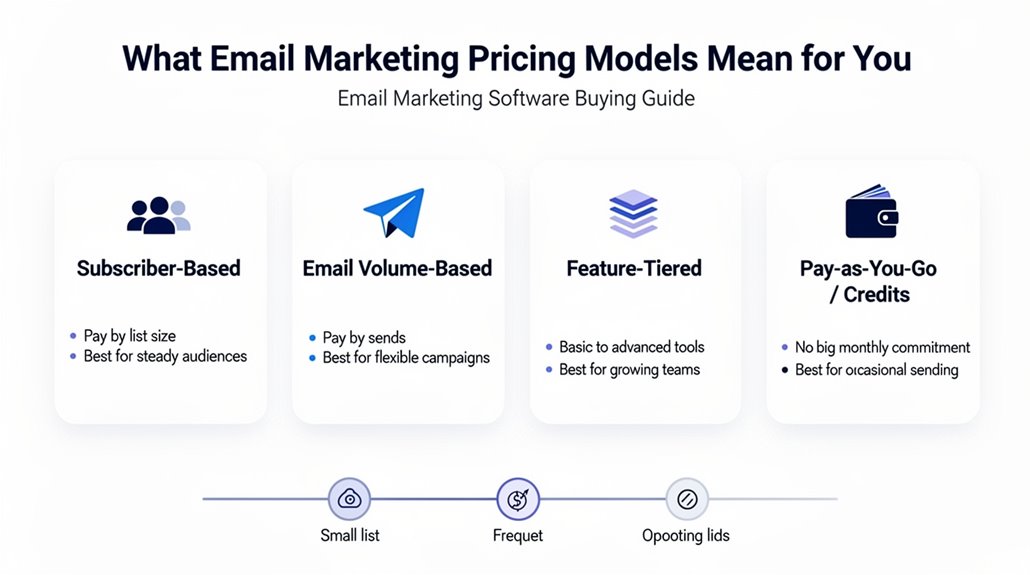
How much you’ll pay for email marketing depends largely on the pricing model your platform uses. Different email marketing platforms offer various pricing models tailored to your needs, whether you’re growing your subscriber count or focusing on sending volume. Knowing what each pricing structure means for you can save money and maximize value.
Here’s a quick overview:
- Subscription-based: Costs increase as your subscriber count grows or you access higher feature tiers.
- Send-based: Pricing is based on the number of emails sent, not your list size.
- Feature tiers: Advanced automation features and analytics often come at higher plan levels.
- Pay-As-You-Go: Buy email credits upfront, ideal for seasonal campaigns or low-frequency sending.
- Free plans: Perfect for small lists, usually with limited features and basic email support.
Understanding these pricing models helps you pick the right plan without overpaying for features or volume you don’t need. Platforms like ActiveCampaign, Omnisend, and Klaviyo offer flexible free and paid plans that allow startups and small businesses to begin with limited resources and upgrade as their needs grow.
What Features Should You Expect in Email Marketing Platforms?
Choosing the right email marketing platform means knowing which features will make your campaigns effective and manageable. You’ll want platforms that offer automation features like drip campaigns and behavioral triggers, alongside customer journey builders that map personalized experiences. Advanced segmentation and A/B testing capabilities help you target the right audience and optimize messages. Don’t forget robust integration options, which guarantee your email data syncs with CRMs and e-commerce tools seamlessly. Analytics and reporting tools provide insights on open rates, clicks, and conversions to refine your strategies. A user-friendly interface speeds up your workflow, while reliable support resources solve issues promptly. Platforms like Mailchimp and Klaviyo leverage AI-driven customer analysis to deliver targeted campaigns that significantly improve engagement and return on investment.
| Feature | Benefit | Example Use |
|---|---|---|
| Automation Features | Streamline campaigns with triggers | Drip campaigns based on user behavior |
| Advanced Segmentation | Personalize targeting | Segment by demographics or activity |
| Analytics and Reporting | Measure and improve campaign performance | Track open and conversion rates |
Which Integrations Boost Your Email Marketing Efforts?
Beyond the core features of your email marketing platform, integrations play a big role in amplifying your campaign’s impact. By connecting with the right tools, you can harness automation and customer data to deliver personalized, timely emails that convert.
Key integrations that boost your efforts include:
- CRM systems like HubSpot or Salesforce for syncing customer data, improving targeting and segmentation.
- Analytics tools such as Google Analytics to track engagement and optimize campaigns based on user behavior.
- eCommerce platforms like Shopify or WooCommerce to automate cart abandonment emails, increasing revenue attribution.
- Social media integrations to share email content easily and engage users across channels.
- Workflow automation tools like Zapier to connect apps and reduce manual tasks, streamlining your marketing efforts.
When evaluating CRM integrations, look for platforms that offer no-code integration options to simplify setup without requiring heavy IT support or technical expertise.
Using these integrations with your email marketing platform elevates efficiency, enhances personalization, and drives better results.
How to Find Reliable Support for Email Marketing Platforms
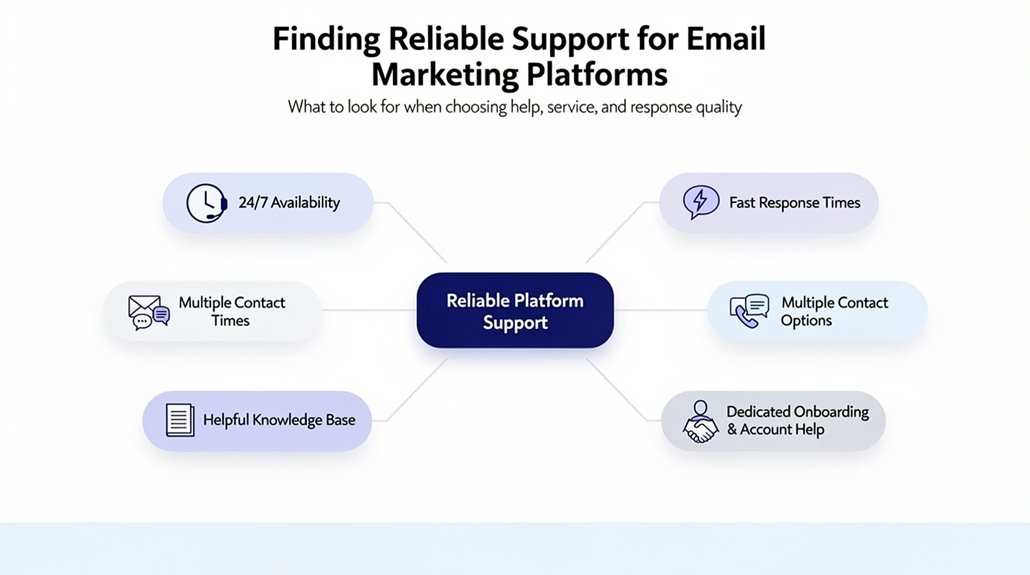
When you run into issues or need help setting up complex automations, having reliable support can make all the difference. To find dependable customer support, first examine the email marketing platforms’ documentation and knowledge base—it’s essential for quick problem-solving and mastering features. Check if the platform offers multiple support channels like live chat, email, and phone to suit your preferences. Platforms like ActiveCampaign and HubSpot excel in this area. Also, evaluate response times and customer satisfaction ratings to gauge reliability. Don’t overlook user groups and community forums, which provide valuable peer support and shared best practices for optimizing your email marketing efforts. Finally, consider the platform’s pricing in relation to the support offered; some may include premium assistance plans. Balancing pricing, accessible documentation, extensive support options, and an active user community will help you select an email marketing platform with the reliable customer support you need to succeed.
When Should You Hire an Agency for Email Marketing Success?
If managing your email marketing platform feels overwhelming or your campaigns aren’t hitting the mark, hiring an agency could be exactly what you need. An email marketing agency brings expertise to align your automation needs and integration requirements with your business goals, ensuring smooth platform operations and improved campaign performance. Consider hiring an agency if you face these challenges:
- Migrating platforms with risk of deliverability or configuration errors
- Complex automation setups needing expert handling
- Desire for data-driven insights to boost revenue attribution and engagement
- Limited internal resources to scale email marketing effectively
- Low engagement or subscriber churn requiring strategic refinement
Advanced marketers often rely on agencies to turn email marketing into a primary revenue channel. By leveraging their expertise, you get tailored strategies and improved engagement, optimizing communications with subscribers. In short, an agency is your partner for scaled email marketing success when complexity and goals exceed your current capacity.
Frequently Asked Questions
Can I Use Email Marketing Software for SMS Campaigns?
Yes, you can use email marketing software for SMS campaigns if it supports SMS integration. You’ll want to check platform compatibility to guarantee smooth SMS automation and manage messaging frequency properly. Keep in mind opt-in requirements and compliance issues to avoid legal trouble. Using campaign metrics helps refine your engagement strategies, targeting the right audience effectively. Also, consider cost comparison between SMS and email to optimize your marketing budget.
How Secure Is Customer Data Within Email Marketing Platforms?
Customer data in email marketing platforms is generally secure because they use data encryption and user authentication to protect your info. They follow compliance regulations and have clear privacy policies that guarantee subscriber consent is respected. Regular data backups, vulnerability assessments, and audit trails help prevent breaches. Plus, they monitor third party integrations carefully and provide breach notifications if anything goes wrong, so you can trust your data’s safety.
Do Email Marketing Tools Offer A/B Testing Capabilities?
Yes, email marketing tools usually offer A/B testing, letting you run split campaigns to boost your campaign effectiveness. You can test subject lines, content variation, and audience segmentation to see what drives user engagement best. With detailed data analysis and performance metrics, you’ll identify winning elements and refine your optimization strategies, helping your emails perform better over time. This makes A/B testing essential for improving your overall email marketing results.
Can I Customize Email Templates Without Coding Knowledge?
Yes, you can easily customize email templates without coding knowledge. Most tools offer user-friendly interfaces with drag and drop editors, letting you personalize templates using pre-designed layouts, responsive designs, and saved templates. You’ll also find options to tweak color schemes, font styles, and integrate images seamlessly. Plus, import functionality lets you bring in existing designs, making template personalization straightforward—even if you’re not tech-savvy.
Are There Limitations on Email List Size With Free Plans?
Yes, most free plan limits restrict your email list size, which can slow subscriber growth. These limits affect list segmentation and marketing strategy, potentially lowering email deliverability and conversion rates. Comparing platforms helps you find better free options, but as your list grows, upgrade options improve user experience and reach. While free plans offer short term benefits, investing in paid plans guarantees your campaigns scale effectively.