
How to Choose an Email Marketing Platform That Can Scale With Your Business
On choosing an email marketing platform, consider more than popularity—discover the key factors that ensure seamless growth with your business.
Choosing an email marketing platform that grows with your business isn’t just about picking the most popular option. You need to contemplate features that align with your goals, whether that’s boosting sales or building brand awareness. Scalability, integration, and pricing all play critical roles, but there’s more to evaluate before making a choice. Let’s explore what factors truly guarantee your email marketing stays effective as your business expands.
Define Your Email Marketing Goals
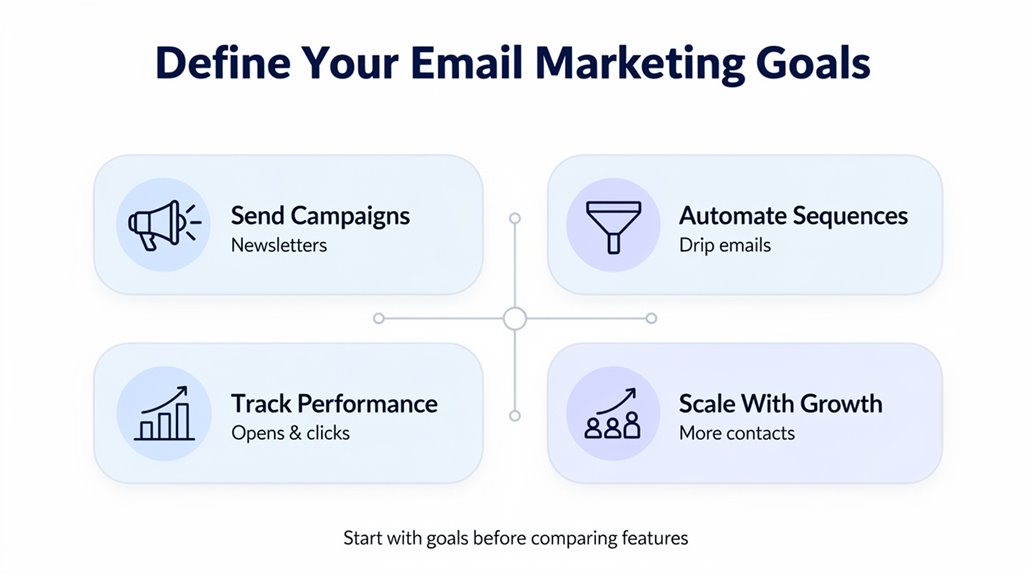
Before choosing an email marketing platform, you need to clearly define your goals—whether it’s boosting sales, increasing brand awareness, nurturing leads, or a mix of these. To define your email marketing objectives effectively, align platform features with your business objectives, ensuring you support both short-term campaigns and long-term strategies like customer relationship building. Consider the specific types of emails you’ll use—newsletters, promotions, or transactional messages—as different platforms excel in different areas. Keep industry-specific requirements in mind; for example, e-commerce businesses may need seamless integration with online stores for product promotion, while B2B companies often prioritize CRM integration for lead nurturing and segmentation. Establishing clear email marketing goals helps you measure ROI more accurately and optimize your campaigns over time. Remember, 87% of businesses recognize email marketing as essential for success, so setting precise goals is key to maximizing the effectiveness of your efforts and choosing the right platform. Platforms with robust segmentation and analytics features allow you to track engagement in real time and refine your strategy as your business grows.
Identify Email Marketing Automation and Scalability Features
Once you’ve outlined your email marketing goals, it’s important to focus on automation and scalability features to handle your growing audience efficiently. Look for platforms offering advanced automation tools like triggered workflows that respond to user behavior or events, streamlining your communication. Dynamic segmentation capabilities are essential for targeted messaging, allowing you to tailor content to specific audience subsets and boost engagement. Prioritize services with high deliverability rates and built-in compliance features to protect your sender reputation as your subscriber count grows. Integration with CRMs guarantees your marketing efforts align seamlessly with your existing data systems, providing a unified approach. Additionally, consider tiered pricing models that scale with your business, so you won’t be stuck with expensive plans before you’re ready. Platforms like ActiveCampaign, HubSpot, and Klaviyo offer flexible free and paid plans that allow startups and small businesses to begin with limited resources and upgrade as their needs grow. Choosing a platform with these email marketing automation and scalability features will help you maintain efficiency, drive conversions, and support your expanding marketing needs without hassles.
Evaluate Deliverability and Audience Management
You’ll want to prioritize platforms with high deliverability rates to guarantee your emails land in inboxes, not spam folders. Effective audience segmentation tools let you target your subscribers based on behavior and preferences, boosting engagement. Don’t forget to check if the platform offers customizable sign-up forms to build precise and relevant email lists. Regularly cleaning your email list also reduces the chances of being flagged as spam and helps maintain strong deliverability over time.
Maximizing Email Deliverability
Anyone serious about email marketing knows that maximizing deliverability is key to getting your messages seen. You need a platform that upholds a strong sender reputation through domain authentication like DKIM and SPF. Audience management tools such as customizable sign-up forms help grow clean, engaged lists. Regular email list cleaning removes inactive addresses to boost campaign performance. Also, A/B testing your emails enhances open rates, essential for sustaining high email deliverability. Advanced segmentation refines targeting, improving relevance without overlap.
| Strategy | Purpose | Key Benefit |
|---|---|---|
| Sender Reputation | Authentication | Avoid spam folders |
| Audience Management | Sign-up forms | Better list growth |
| Email List Cleaning | Remove inactive emails | Higher deliverability |
| A/B Testing | Test subject/content | Improved open rates |
| Advanced Segmentation | Target specific groups | Increased engagement |
Effective Audience Segmentation
Maximizing email deliverability lays the groundwork, but effectively segmenting your audience takes your campaigns a step further by targeting the right people with relevant content. With effective audience segmentation, you can base your lists on behaviors, preferences, and purchase history, enabling personalized messaging that boosts engagement. Look for platforms offering customizable sign-up forms and the ability to segment lists dynamically, which can increase open rates by up to 29%. It’s just as important to evaluate deliverability rates to guarantee your messages hit inboxes, not spam folders. Use advanced analytics tools for tracking segmentation effectiveness and refining your strategies. A/B testing options let you experiment with different segments and messages, optimizing campaigns through data-driven insights to maximize conversions and sustain growth.
Prioritize Integration With CRM and eCommerce Tools
You’ll want an email marketing platform that connects smoothly with your CRM and eCommerce tools. This integration lets you manage customer data in one place, making your campaigns more personalized and timely. Syncing these systems also helps you create targeted messages based on real behaviors and purchase history. Platforms like HubSpot and Salesforce even use automated lead scoring to prioritize high-potential prospects and improve overall conversion rates.
Seamless CRM Connectivity
When choosing an email marketing platform, you’ll want to zero in on seamless CRM connectivity to keep your subscriber data in sync and your campaigns targeted. Integration with CRM systems like Salesforce or HubSpot enhances audience segmentation, letting you tailor personalized messaging using detailed customer data. Platforms that efficiently handle transaction data enable automated workflows, triggering timely emails such as abandoned cart reminders and follow-ups. This real-time data exchange improves engagement by responding to customer actions promptly. Prioritizing a platform with robust API options guarantees smooth connectivity with your current tech stack, supporting ongoing customer relationship management. With seamless CRM connectivity, you can effortlessly synchronize data and create smarter, more effective marketing campaigns that scale as your business grows.
eCommerce Platform Sync
Following seamless CRM connectivity, the next key factor is ensuring your email marketing platform syncs smoothly with your eCommerce tools like Shopify or WooCommerce. This seamless integration enables real-time data synchronization, powering robust segmentation and personalized campaigns based on customer relationships and purchase behavior. Prioritize platforms with strong CRM integration and advanced features such as behavioral triggers that react instantly to customer actions. Look for solutions that support transactional email management to send timely order confirmations and shipping updates, maintaining high deliverability and customer trust. Many advanced platforms offer APIs or pre-built connectors tailored for ecommerce platforms like Shopify, simplifying workflows while enhancing insights. By choosing a platform that combines these capabilities, you’ll optimize engagement and streamline your marketing efforts as your business scales.
Unified Data Management
Although managing multiple data sources can be challenging, choosing an email marketing platform that prioritizes integration with your CRM and eCommerce tools makes unified data management much easier. This integration guarantees seamless data flow, giving you real-time customer data that enhances customer insights across sales, support, and email channels. With a unified customer view, you can leverage advanced segmentation tools based on purchase behavior and engagement history to create personalized campaigns. Automation workflows like abandoned cart reminders become effortless, improving engagement rates. Prioritizing platforms with strong CRM and e-commerce tools integration streamlines your marketing strategies and supports effective decision-making as your business scales. Unified data management helps you stay organized, efficient, and focused on delivering a consistent, targeted customer experience.
Choose Flexible Pricing and Upgrade Plans
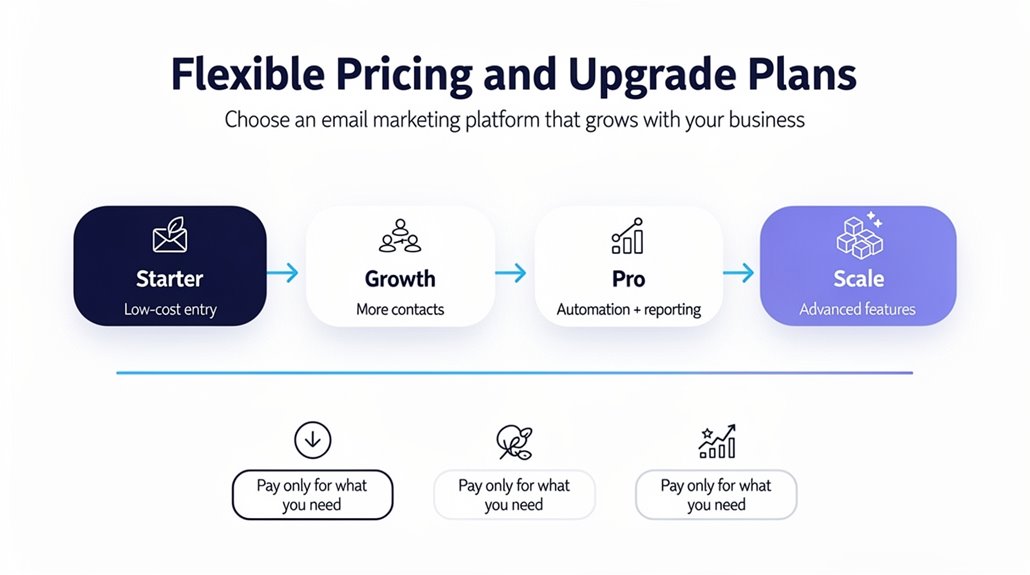
How do you find an email marketing platform that grows with your business without breaking the bank? Start by choosing one with flexible pricing models—whether pay-as-you-go or tiered subscriptions—that align with your budget at every stage. Check if they offer a free plan or trial, so you can explore scalability options and test features like advanced automation and analytics before committing. It’s vital to pick a platform that charges based on active subscribers, not total contacts, helping you save if you have many inactive leads. Also, look for email marketing platforms with smooth upgrade plans, allowing you to easily scale as your subscriber count rises and your marketing needs evolve. For example, HighLevel offers tiered plans ranging from $97/month up to $597/month, with a 30-day free trial available so you can evaluate the platform’s full capabilities before making a financial commitment. With the right pricing structure and upgrade path, you’ll avoid surprises and guarantee your investment supports your growth efficiently.
Test Usability and Template Customization
Anyone looking to streamline their email marketing will want to test a platform’s usability and template customization thoroughly. Start by exploring the user-friendly interface—does it offer a drag-and-drop email editor so you can build emails without coding? Check if the platform provides responsive templates that adjust seamlessly across devices, guaranteeing mobile optimization and consistent visual engagement. A robust customizable email template system lets you tailor designs to your brand’s style quickly, speeding up campaign deployment.
Don’t forget to evaluate how easily you can edit templates, especially on mobile versus desktop, to maintain professionalism in every inbox. Platforms with built-in A/B testing capabilities empower you to experiment with different layouts and content, helping improve your campaign’s performance based on real audience interactions. When you test usability and template customization, you confirm your email marketing stays effective and scalable as your business grows.
Assess Customer Support and Onboarding
Why does great customer support matter when choosing an email marketing platform? Because you need reassurance that help is available whenever you hit a snag. Prioritize platforms offering 24/7 assistance, especially if your business spans multiple time zones. Check if they provide thorough onboarding resources—like tutorials, webinars, and dedicated support representatives—to guarantee a smooth shift and quick mastery of the platform. Responsive support can save you time and frustration, so opt for providers known for prompt and helpful customer support. Also, explore if there’s a community forum or knowledge base, giving you access to FAQs and peer advice whenever you need it. Finally, see if personalized support options like one-on-one consultations are available to address your evolving business needs. With these elements in place, you’ll smoothly scale your email marketing efforts while having reliable guidance at every step.
Review Case Studies and User Feedback for Long-Term Fit
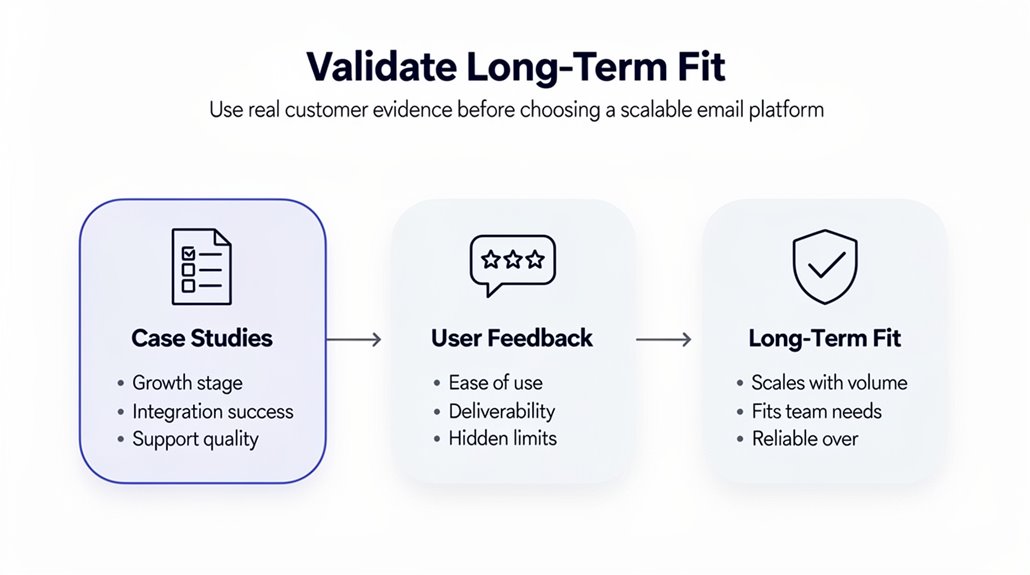
When selecting an email marketing platform, what better way to gauge its long-term fit than by diving into real-world case studies and user feedback? Case studies, like Remix’s success with Insider One showing a 104% increase in first purchases through dynamic personalization, highlight how automation features can scale your business effectively. User feedback from platforms such as Brevo emphasizes ease of use and responsive customer support, which are crucial for long-term sustainability. Checking ratings on sites like G2 and Capterra can also give you a quick snapshot of user satisfaction—platforms with at least 4 out of 5 stars generally indicate reliable performance. Don’t overlook integration capabilities either; platforms syncing well with Customer Data Platforms provide valuable insights for more targeted campaigns. By thoroughly reviewing case studies and user feedback, you guarantee the email marketing tools you choose not only meet current needs but also support your growth and evolving customer base over time.
Frequently Asked Questions
How Do Email Marketing Platforms Handle Data Privacy and Compliance?
Email marketing platforms prioritize data protection by ensuring GDPR compliance and obtaining clear user consent before emailing. They implement email encryption and strict privacy policies to safeguard customer data. Platforms regularly undergo compliance audits to meet anti-spam regulations and maintain information security. They also set guidelines for data retention to avoid holding data longer than necessary. By handling your data responsibly, they help you stay compliant and protect your customers’ privacy effectively.
Can I Migrate Existing Email Lists Easily Between Platforms?
Yes, you can usually handle email list migration pretty smoothly if you pick a platform with strong compatibility and varied data import methods. Look for user interface simplicity and built-in verification processes to avoid errors. Segmentation capabilities help keep your lists organized during the change. It’s smart to back up campaigns beforehand. Also, check integration options and customer support responsiveness to ease transition timelines and resolve issues quickly.
What Analytics Features Help Track ROI Beyond Open Rates?
You’ll want analytics features like click through rates and conversion tracking to truly measure ROI beyond open rates. Customer segmentation, journey mapping, and funnel analysis help you understand how different groups engage and progress toward purchase. A/B testing refines your approach, while revenue attribution connects email actions to actual sales. Don’t overlook engagement metrics, list growth, and retention rates—they show long-term impact and help you optimize every email campaign.
Are There Limits on Sending Volume During High-Demand Periods?
Yes, many platforms enforce volume thresholds and user limits to manage sending speed during high-demand periods. This helps with delivery optimization by preventing issues tied to traffic spikes and seasonal campaigns. Email throttling and queue management control burst sending, ensuring bandwidth allocation is balanced across users. These limits protect your campaigns from delays and maximize inbox placement, so you’ll want to check how your platform handles volume spikes before scaling up.
How Secure Is the Platform Against Cyber Threats and Hacking?
You’ll want a platform that uses strong encryption standards and supports two-factor authentication to keep your account safe. Check if they conduct regular vulnerability assessments and have solid security protocols to prevent data breaches or hacking incidents. Effective user access controls, ongoing threat intelligence, and a responsive incident response team are essential. Also, secure integration with your other tools helps reduce risks. This all guarantees your data stays protected against cyber threats.