

Best CRM Software for Startups: Top Tools to Organize Leads, Sales, and Customer Growth
Cracking the code to efficient lead management and sales growth starts with choosing the right CRM—discover which tools startups trust today.
If you’re running a startup, you know juggling leads and sales can quickly become overwhelming. Using the right CRM software can simplify your processes and help turn prospects into loyal customers. But with so many options available, how do you find one that fits your needs and budget without adding unnecessary complexity? Exploring the best CRM tools designed specifically for startups might be the key to opening smoother growth and better organization.
Why Startups Need a CRM to Organize Leads and Sales
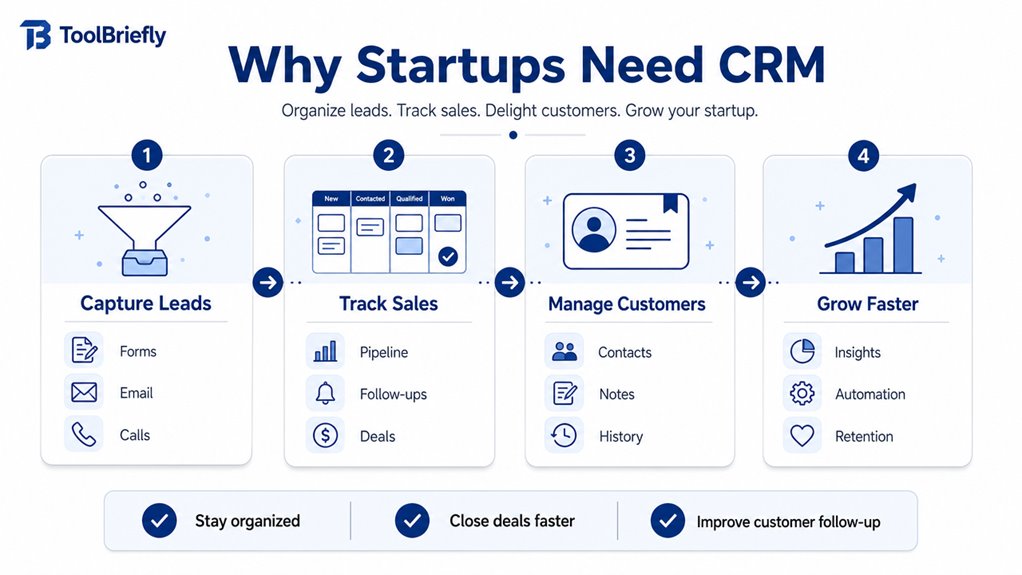
Starting a new business means juggling a lot, and without the right tools, your leads and sales can quickly become a chaotic mess. For startups, adopting a CRM is essential to organizing leads and streamlining sales efforts. A good CRM centralizes customer data, enhancing team collaboration and providing clear visibility into your sales pipeline. This visibility helps guarantee no lead slips through the cracks and follow-ups stay systematic. By automating repetitive tasks, the CRM frees your team’s time, letting you focus on closing deals and driving customer growth. Additionally, startups benefit from improved customer retention, as 41% of CRM users experience higher loyalty thanks to personalized interactions and proactive issue management. Using CRM tools also sharpens your organizational strategy by optimizing resource allocation and boosting team productivity. Ultimately, a CRM isn’t just software—it’s the backbone of your sales process and a catalyst for sustainable customer growth.
Common Challenges Startups Face Without CRM Software
Without CRM software, you’ll often struggle to keep track of leads and follow up consistently, which can cost you potential sales. Disorganized data means important customer details might slip through the cracks, making it harder to build relationships. These challenges can slow your growth and make managing your sales efforts much more complicated.
Lead Follow-Up Difficulties
When lead follow-up isn’t consistent, you risk losing potential clients and revenue. Without CRM software for startups, your lead management can quickly become chaotic. Lacking organized systems often causes communication confusion among team members, leading to duplicated outreach or missed follow-ups. Manual data entry errors further obscure your sales processes, making it tough to track progress or prioritize leads effectively. This disarray hampers customer engagement, frustrating prospects with delayed responses and lowering customer satisfaction. By contrast, automated workflows in CRM software streamline follow-up tasks, reduce errors, and keep your team aligned. Without such tools, maintaining timely, effective communication is a constant challenge—one that directly impacts your ability to convert leads and grow your startup efficiently.
Data Disorganization Issues
Although you might rely on spreadsheets and informal tools early on, managing data that way often leads to silos and disorganization that stunt growth. Without CRM software, you risk poor visibility into leads and an unclear sales pipeline, making it tough to manage leads consistently. Data disorganization causes communication breakdowns since customer data isn’t centralized, leading to lost contacts and missed opportunities. This chaos affects customer experiences, as delays and inconsistent interactions become inevitable. CRM helps by centralizing data, streamlining sales automation, and providing clear insights into your pipeline. With a CRM, you gain better control over your leads, avoid communication hiccups, and improve overall coordination. In short, adopting CRM software eliminates these common startup challenges and supports smoother growth.
Essential CRM Features That Fuel Startup Growth
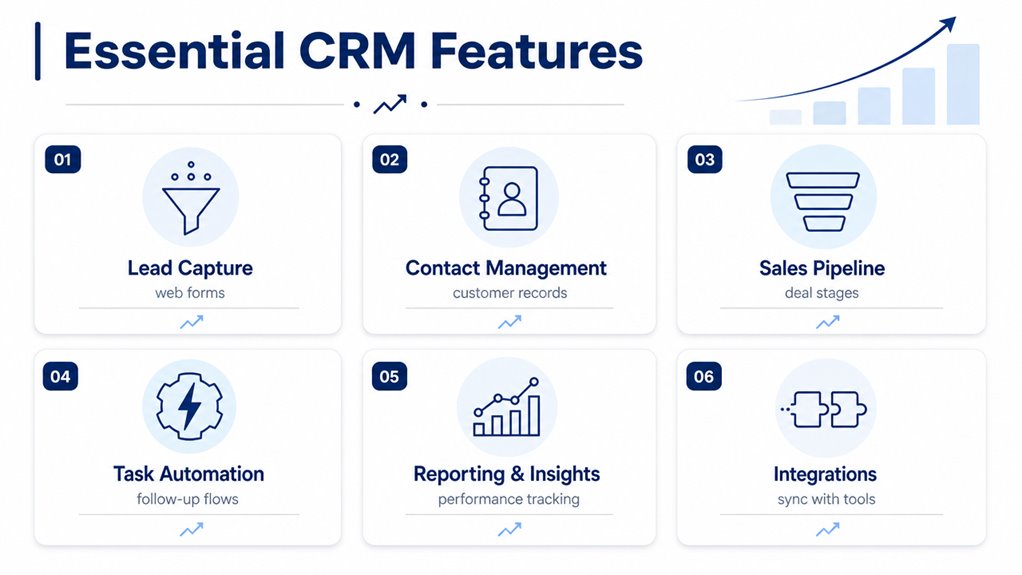
A CRM that fits your startup’s unique needs can make all the difference in accelerating growth. The best CRM software offers essential CRM features like lead and contact management, pipeline management, and automation tools that streamline sales and boost efficiency. Customer relationship management software with user-friendly interfaces guarantees your team adopts it quickly, minimizing downtime and maximizing productivity. Mobile accessibility is vital, especially if your startup team works remotely or on-the-go, allowing continuous engagement with leads anytime, anywhere. Customization and scalability are also key—you’ll want a system that adapts to your evolving workflows and growth without constant overhauls. Automated task management and reporting save you time by handling repetitive work, so your focus remains on closing deals. Choosing CRM software that combines these elements means you’re well-equipped to fuel your startup’s growth with streamlined processes and smarter sales management.
How CRM Software Improves Lead Tracking and Customer Management
To keep your startup’s growth on track, managing your leads and customers effectively is just as important as having the right features. CRM software improves lead tracking by giving you clear visibility into each lead’s interactions and status, so you can time your follow-ups perfectly. With automation tools, it centralizes all customer and lead information in one platform, reducing the risk of lost contacts and boosting customer management efficiency. Customizable lead scoring helps you prioritize high-potential leads, increasing sales conversion chances. Plus, real-time dashboard analytics let you track your sales pipeline and adjust strategies quickly. Integrated communication tools within the CRM guarantee your team stays aligned, streamlining collaboration on customer follow-ups and next steps. By using CRM software to track and manage leads and customers, you’ll enhance your ability to nurture relationships and convert prospects, ultimately driving your startup’s growth with smarter, faster customer management.
How to Choose the Right CRM That Grows With Your Startup
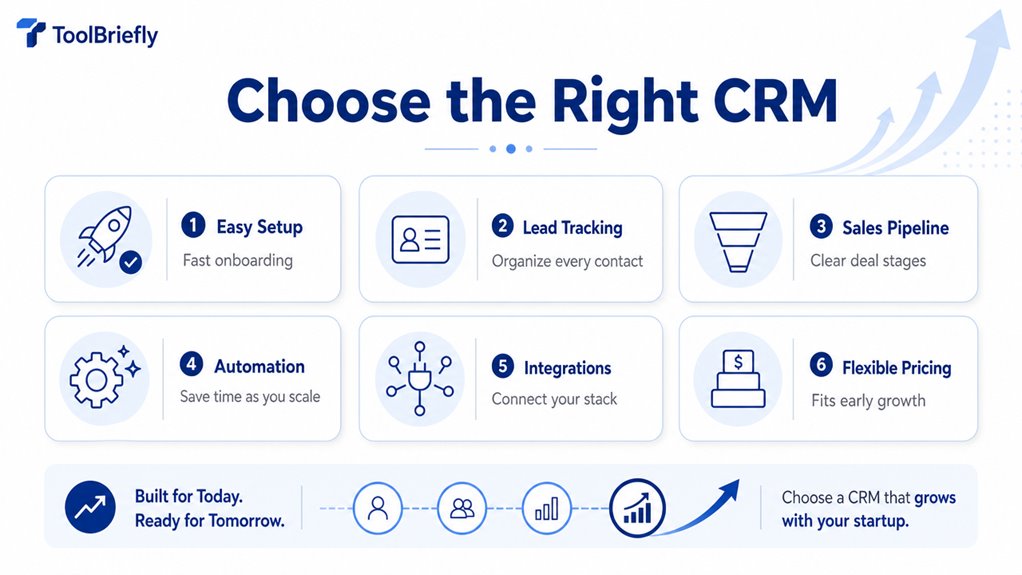
Choosing the right CRM means finding one that’s easy to use and fits your team’s needs without wasting time on complicated setups. You’ll want a solution that scales with your growth and offers flexible pricing, so you’re not stuck upgrading or switching as your startup evolves. Considering both budget and long-term adaptability guarantees your CRM will support your business every step of the way.
Scalability And Flexibility
While your startup evolves, you’ll need a CRM that grows alongside it—offering customizable options and scalable features to match your changing business demands. To guarantee scalability and flexibility, focus on these key points:
- Choose cloud-based CRMs that provide mobile access, so your team can manage leads anywhere, supporting remote work dynamics.
- Opt for platforms with flexible pricing models, allowing you to scale expenses without losing essential features.
- Prioritize integration capabilities to streamline processes by connecting your CRM with existing apps and tools effectively.
- Select CRMs that automate routine tasks like lead tracking and reporting, freeing your team to focus on strategic growth aligned with evolving business needs.
Ease Of Use
As your startup grows, having a CRM that’s easy to use becomes just as important as its scalability and flexibility. You want the best CRM for startups with user-friendly interfaces that your team can adopt quickly. Cloud-based solutions provide flexibility and remote access, while customizable features guarantee the software evolves with your needs. Focus on tools supporting lead tracking, sales management, and task automation to streamline processes efficiently. Always evaluate usability with free trials, gather team feedback, and verify the CRM fits your workflow.
| Feature | Benefit | Why It Matters |
|---|---|---|
| User-Friendly UI | Quick adoption | Boosts productivity |
| Cloud-Based Access | Work anywhere | Supports remote teams |
| Customizable Tools | Scales with growth | Matches evolving workflow |
Budget And Pricing
When you’re selecting a CRM that fits your startup, keeping an eye on budget and pricing is essential to avoid unexpected expenses down the line. Startups face challenges balancing cost with needed features, so it’s wise to evaluate CRMs carefully. Here’s how to choose an affordable CRM that grows with you:
- Look for flexible pricing models offering entry points as low as $9–$14 per user per month.
- Use free trials or free plans to test CRM features without commitment.
- Consider tiered pricing so you can scale features and costs as your startup evolves.
- Calculate the total cost of ownership, including future upgrades, to avoid surprises on platforms like Salesforce.
This approach helps you find a CRM that fits your budget while supporting growth.
Top CRM Software Options for Startups in 2024
Choosing the right CRM software can make a huge difference for your startup’s growth and efficiency. Among the best CRM platforms for startups in 2024, Bigin by Zoho CRM stands out with its user-friendly interface and affordable pricing, helping small teams manage sales and customer support with ease. Pipedrive is perfect if you want to boost your sales efforts thanks to its intuitive design and AI-powered features. For those on a tighter budget, Less Annoying CRM offers straightforward tools with transparent pricing, focusing on minimizing frustration while covering essential CRM needs. Freshsales CRM serves small teams with effective deal management but may be less attractive pricing-wise for larger groups. Salesforce Starter Suite provides extensive capabilities suitable for more established businesses, though it comes with higher subscription costs. By choosing a CRM software tailored to your startup’s size and focus, you’ll better manage leads, sales, and customer growth without breaking the bank.
Tips for Easy CRM Setup and Team Adoption
Getting your CRM up and running smoothly starts with picking a user-friendly platform that needs minimal training. This guarantees quick integration and boosts team adoption, making the shift seamless. To make setup easier and encourage collaboration, follow these tips:
- Involve your team early in the CRM selection to align features with their needs and gain buy-in.
- Use free trials to test CRM features and usability, letting your team experience the platform firsthand.
- Provide extensive training resources and ongoing support to help everyone navigate the system confidently.
- Regularly collect feedback during initial use to identify issues and optimize the CRM setup for better productivity.
How to Measure Your CRM’s Impact on Startup Sales and Efficiency
How can you tell if your CRM is truly making a difference in your startup’s sales and efficiency? You need to track specific metrics that show how well your CRM tools help manage leads, support sales, and drive customer growth. Focus on KPIs like sales conversion rates and customer retention rates to measure success accurately. Additionally, your CRM should improve sales forecasting and automate repetitive tasks, which boosts sales efficiency.
Here’s a quick snapshot of what to measure:
| Metric | Expected Impact |
|---|---|
| Sales conversion rates | Increase by up to 30% |
| Customer retention rates | Improve by approximately 41% |
| Sales forecasting accuracy | Boost by up to 40% |
| Lead response time | Reduce by as much as 20% |
| Time saved via automation | Save up to 15 hours per employee weekly |
Tracking these indicators helps you understand how your CRM tools for sales truly support your startup’s growth.
Frequently Asked Questions
What CRM Software Is Best for Managing Leads?
The best CRM software for managing leads offers lead tracking, contact management, and robust reporting tools. You’ll want strong automation features and data analysis to optimize your sales efforts. Look for platforms with excellent user experience, customization options, and integration capabilities to fit your workflow. Mobile accessibility is key for on-the-go updates. Pricing models vary, so choose one that balances features and budget. HubSpot and Pipedrive are top contenders you should consider.
What Are the Top 3 CRM Tools?
The top 3 CRM tools you should consider are HubSpot, Pipedrive, and Zoho. Each offers great user experience and strong integration capabilities. HubSpot’s flexible pricing models and mobile accessibility stand out, while Pipedrive shines with customization options and ease of implementation. Zoho’s reporting features and customer support get excellent user reviews. Market trends show these three balance robust features with minimal implementation challenges, making them perfect for startups like yours.
Which CRM Software Helps Businesses Manage Sales and Customer Relationships?
You’ll find that HubSpot and Pipedrive excel at managing sales and customer relationships. They offer user-friendly interfaces with mobile access, making it easy to track your sales pipeline on the go. Automated workflows and lead nurturing features boost customer engagement, while robust data analysis and performance tracking help you optimize results. Plus, their integration capabilities and scalability options guarantee the CRM grows with your business needs seamlessly.
What Are the 4 Types of CRM?
The four types of CRM are Operational, Analytical, Collaborative, and Campaign Management. Operational CRM focuses on sales automation and lead scoring to improve the customer lifecycle. Analytical CRM uses data analytics for better decision-making. Collaborative CRM boosts team collaboration and CRM integration across departments. Campaign Management CRM offers customization options and mobile access for targeted marketing. Choosing a cloud solution with great user experience will help you streamline processes and grow efficiently.