
Marketing Automation Tools: Features Lean Teams Should Prioritize Before Buying
What features must lean teams prioritize in marketing automation tools to boost efficiency and impact? Discover the essentials before buying.
If you’re part of a lean team, you know every minute and resource counts. Choosing the right marketing automation tool isn’t just about flashy features; it’s about practical functionality that fits your workflow. You’ll want to focus on tools that simplify complex tasks, enhance customer insights, and streamline campaign management. But which features truly make a difference when you’re aiming for efficiency and impact? Let’s explore what should top your list before making a decision.
Marketing Automation Essentials for Lean Teams
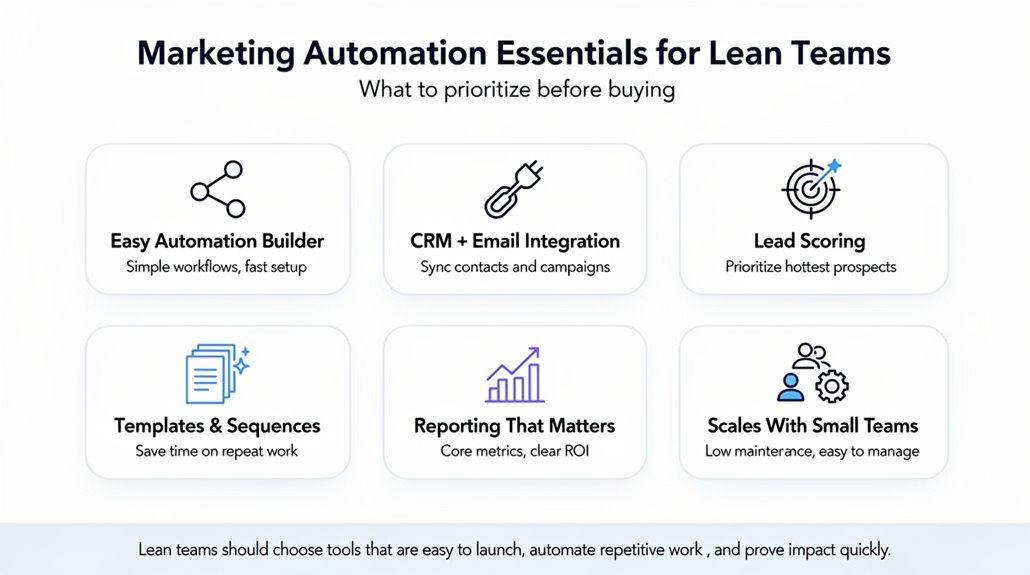
While you might be working with a small team, choosing the right marketing automation tools is vital to maximize your impact without overwhelming your resources. Focus on user-friendly interfaces that let your team adopt automation easily, even without technical skills. Dynamic segmentation capabilities are essential, enabling you to tailor campaigns based on real-time user behavior and demographics, improving relevance and conversions. CRM integration is another vital feature, ensuring seamless data flow and streamlined workflows by unifying customer information from multiple sources. Automated A/B testing saves you time by optimizing your messaging without heavy manual input, making your campaigns more effective. Thorough reporting and dashboards keep you informed about key metrics, empowering data-driven decision-making. Tools like ActiveCampaign and HubSpot provide real-time tracking metrics such as open rates, click-through rates, and conversions to help lean teams make faster, more informed adjustments to their campaigns. Prioritizing these features will help you gain maximum efficiency and make smart marketing choices, all while keeping your lean operations nimble and responsive.
Why Multi-Channel Marketing Automation Matters
How can you boost your marketing impact without stretching your small team too thin? Multi-channel marketing automation is your answer. By managing cohesive campaigns across platforms, you increase customer lifetime value by up to 5X compared to single-channel efforts. This centralized approach simplifies workflow automation, letting you focus on strategy instead of juggling tools.
Here’s why multi-channel marketing automation matters for your lean team:
- Delivers consistent messaging to build brand trust and drive higher customer engagement
- Enables hyper-targeted campaigns that improve conversion rates and reduce unsubscribes
- Centralizes campaign management, saving time and minimizing errors
- Supports cohesive campaigns across email, social, and more for maximum reach
- Increases customer lifetime value by nurturing relationships at every touchpoint
Platforms like HighLevel automate multi-channel follow-up campaigns across SMS, email, and social platforms, helping lean teams manage lead conversations without adding headcount.
Using multi-channel marketing automation helps you engage customers effectively while maximizing limited resources.
How Advanced Segmentation Boosts Campaign Personalization
Multi-channel marketing automation sets the stage for reaching your audience effectively, but the real power lies in tailoring those messages through advanced segmentation. By leveraging advanced segmentation, you can create hyper-targeted campaigns that categorize audiences based on customer behavior, demographics, and engagement metrics. This precision boosts campaign performance by ensuring your messages resonate. Dynamic segmentation takes it further by automatically updating groups in real-time, increasing relevance and conversion rates. Personalized campaigns driven by these strategies reduce unsubscribe rates and improve subscriber retention by delivering content your audience truly values. You’ll also see stronger brand loyalty emerge as customers engage with relevant product recommendations tailored to their needs. Overall, advanced segmentation shifts your approach from generic blasts to meaningful interactions, dramatically enhancing engagement metrics and strengthening customer relationships. Tools like Mailchimp and Klaviyo analyze customer data for targeted campaigns, giving lean teams a powerful foundation for building segmentation strategies that drive measurable results. This focus is essential for lean teams aiming to maximize impact while maintaining efficiency in their marketing efforts.
Using Lead Scoring and Automation to Save Time
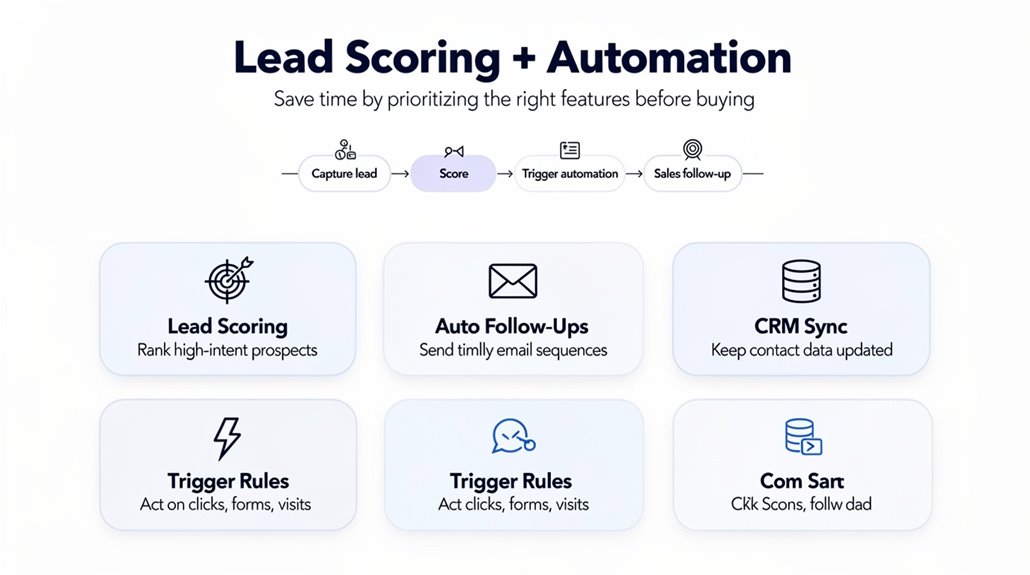
One of the smartest ways you can save time and boost efficiency is by implementing lead scoring combined with automation. By using marketing automation software, you can prioritize leads based on their interactions and engagement, focusing your efforts where they matter most. Automated lead nurturing workflows adapt messaging using lead scores, enhancing customer engagement and moving prospects steadily through the funnel. With real-time adjustments and segmentation capabilities, you shorten the sales cycle while saving time. Platforms like HighLevel take this further by offering AI-powered conversation tools that engage and nurture customers around the clock without adding to your workload.
Here’s how lead scoring and automation help you:
- Prioritize leads to focus on high-intent prospects
- Automate lead nurturing with tailored communications
- Save 6-8 hours weekly on manual lead tracking
- Use dynamic, real-time scoring to align marketing and sales
- Boost sales opportunities by 20% with targeted outreach
Leveraging these features allows you to work smarter, not harder, driving better results with less effort.
How to Connect Your Marketing Automation With CRM Tools
Connecting your marketing automation with CRM tools takes the lead scoring and nurturing strategies to the next level by syncing customer data seamlessly. By integrating these platforms, you break down data silos, creating a unified view of customer interactions that enhances customer engagement across channels. Real-time updates between marketing automation and CRM systems guarantee your sales team always has the latest lead information, improving lead management and accelerating decision-making. This connection also powers advanced analytics that help you track KPIs and identify high-value segments more effectively. Aligning marketing automation with CRM streamlines lead scoring, making qualification more precise and fostering collaboration between marketing and sales. Ultimately, this integration improves how you manage leads, drives more meaningful customer interactions, and shortens your sales cycle without extra effort. Platforms like HubSpot and Agile CRM demonstrate how integrated marketing automation can simplify campaign management while keeping your sales and marketing data fully aligned. If you want to maximize your lean team’s efficiency, connecting your marketing automation with CRM is a must-have step for smarter customer data usage and improved business outcomes.
Building Effective Workflow Automation and Drip Campaigns
You’ll want to start by designing workflow automation that handles repetitive tasks seamlessly, freeing you up to focus on strategy. Crafting drip campaigns lets you nurture leads with timely, personalized messages that keep prospects engaged over time. Combining these approaches guarantees your marketing runs smoothly and drives better results without extra hands.
Designing Workflow Automation
Crafting effective workflow automation means building clear, logical sequences that guide your prospects smoothly through their journey, ensuring each message hits at just the right time. With workflow automation, you can design personalized customer journeys using email automation and multi-channel campaign management, reducing repetitive tasks while maximizing engagement levels. Incorporate dynamic content to tailor messages based on user data, improving relevance and response rates. Drip campaigns form an essential part, deploying automated emails triggered by behavior to nurture leads effectively.
To design efficient workflow automation, focus on:
- Mapping the entire customer journey clearly
- Integrating multiple channels for seamless communication
- Leveraging dynamic content for personalization
- Automating timely, behavior-triggered emails
- Reducing manual intervention by automating repetitive tasks
Crafting Drip Campaigns
Building on your workflow automation, drip campaigns let you nurture leads steadily over time by sending a series of targeted, timed emails. Marketing automation platforms use automation tools and AI-driven insights to analyze user behavior patterns, improving your email campaigns with personalized content and optimized sending times. This boosts engagement rates and helps your marketing teams focus on strategy instead of manual tasks. Drip campaigns typically include at least five emails to guide prospects through the funnel effectively.
| Feature | Benefit |
|---|---|
| Automated workflows | Saves time, reduces errors |
| AI-driven insights | Tailors content per behavior |
| Personalized content | Increases engagement rates |
| Timed emails | Guarantees consistent contact |
| Marketing automation | Scales drip campaigns easily |
Key Metrics Reporting and Analytics Must Deliver
You need real-time data insights to quickly understand how your campaigns are performing and make fast adjustments. Customizable performance dashboards let you track the exact metrics that matter most at every stage of the funnel. With these tools, you’ll spot trends and opportunities without wasting time on irrelevant data.
Real-Time Data Insights
When you rely on real-time data insights, you get instant access to key performance indicators like average open rates and conversion rates, so you can quickly gauge how well your campaigns are performing. These insights help you track customer interactions and user behavior across channels, ensuring you don’t miss critical engagement metrics. With automated reporting, you save time and focus more on strategy instead of manual data gathering. Predictive analytics, powered by machine learning, enables you to anticipate trends and optimize campaign effectiveness. Plus, measuring marketing ROI in real time lets you pivot tactics swiftly for better results.
- Monitor campaign effectiveness with real-time engagement metrics
- Analyze customer interactions across multiple channels
- Automate reporting to save valuable time
- Use predictive analytics and machine learning to forecast trends
- Measure marketing ROI to refine strategy instantly
Customizable Performance Dashboards
Customizable performance dashboards give lean teams the power to track essential metrics like open rates, click-through rates, and conversion rates in real time, helping you make quick, data-driven decisions. These dashboards consolidate data from various campaigns and channels, offering a thorough view of your marketing automation efforts. By focusing on key performance indicators (KPIs)—such as revenue per lead and marketing return on investment (ROI)—you can measure the true impact of your campaigns. Visualizations reveal trends over time, so you can identify what’s working and adjust strategies accordingly. Plus, customizable notifications keep you informed about significant metric changes, ensuring timely responses. With these tools, you’ll stay agile and maximize marketing results without getting overwhelmed by scattered data.
Ensuring Compliance and Data Privacy in Marketing Automation
Although marketing automation can boost efficiency, it also demands strict attention to compliance and data privacy to protect both your customers and your business. When selecting marketing automation tools, prioritize features that help you navigate regulations like GDPR and CCPA. These laws require automated consent management and explicit permission to process customer data.
To maintain compliance and build consumer trust, look for tools with:
- Automated consent management aligning with GDPR and CCPA requirements
- Easy access and control over customer data requests
- Integrated data privacy controls to reduce legal risks
- Options to manage privacy preferences across channels
- Regular audits and monitoring for evolving compliance needs
Effective data integration guarantees privacy preferences are consistently applied. By focusing on compliance and data privacy features, you safeguard your customers’ information and reinforce your brand’s credibility in today’s strict regulatory landscape.
Frequently Asked Questions
What Is the 3 3 3 Rule in Marketing?
The 3 3 3 rule in marketing means sharing three key messages through three formats across three channels. You’ll boost your marketing strategy by blending content personalization with email campaigns, automated workflows, and social media. It taps into customer segmentation and lead scoring, improving user experience and ensuring your message connects. Using data analytics and performance metrics, you can refine efforts, making your campaigns smarter and more effective with the 3 3 3 principles.
What Should Guide Your Prioritization for Automation?
You should guide your prioritization for automation by focusing on the automation benefits that align with your goals, like lead management and analytics features. Compare features carefully to guarantee ease of use and strong integration capabilities with your existing tools. Budget considerations and scalability options matter too, so you don’t outgrow the platform. Don’t forget customer support quality, since a smooth user experience depends on prompt help when issues arise.
What Are the Top 5 Automation Tools?
The top 5 automation tools you should consider are HubSpot, ActiveCampaign, Klaviyo, Salesforce Marketing Cloud, and Microsoft Dynamics 365. They excel in email marketing, lead generation, and social media content scheduling. Each offers strong customer segmentation, analytics reporting, and campaign tracking capabilities. Plus, their workflow management and sales integration features boost your user experience, letting you streamline campaigns easily and connect with your audience more effectively.
Which Tool Is Commonly Used for Marketing Automation?
HubSpot Marketing Hub is commonly used for marketing automation because it excels in Email Campaigns, Lead Scoring, Social Media integration, and Customer Segmentation. You’ll appreciate its Workflow Automation and Reporting Analytics, plus A/B Testing to boost effectiveness. With strong CRM Integration, it guarantees a smooth User Experience. You can easily track your performance, making it perfect if you want to streamline your marketing while keeping things efficient and measurable.