
How to Choose Email Marketing Software: Features, Costs, and What Really Matters
Choosing the best email marketing software means balancing features, costs, and ease of use—but what crucial factors should you never overlook? Find out here.
Choosing the right email marketing software isn’t just about picking a popular name or the lowest price. You’ll need to weigh essential features, automation options, and how well the platform integrates with your current tools. It’s also important to evaluate how costs will scale as your list grows and whether the user experience matches your comfort level. Understanding these factors can save you time and frustration down the road—but where do you start?
How to Identify Your Email Marketing Goals
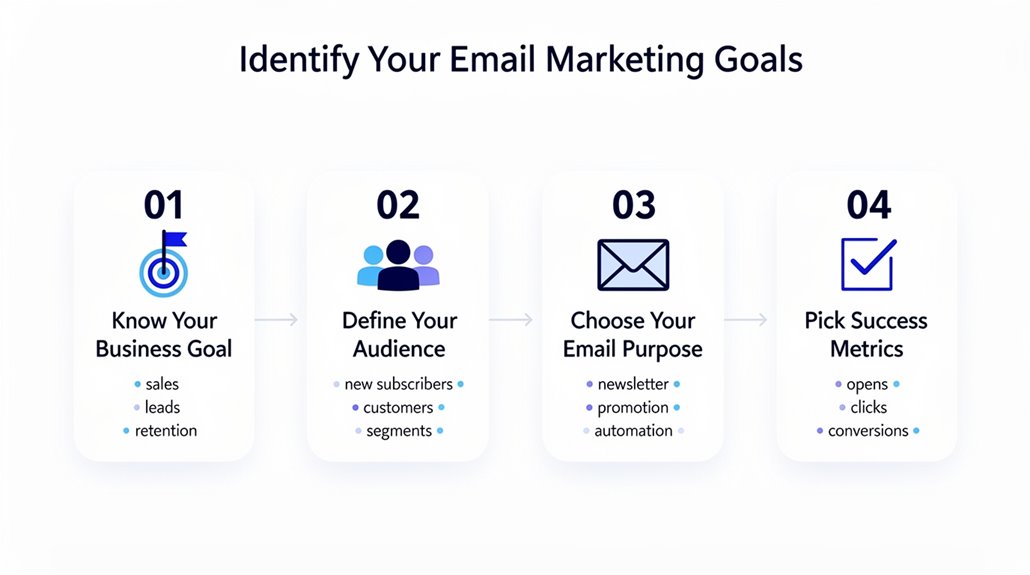
How do you set effective email marketing goals? Start by defining clear objectives tailored to your needs, like boosting engagement by a certain percentage or hitting a specific number of sales within a timeframe. Next, think about the customer journey—acquisition, retention, and re-engagement—and create distinct email marketing goals for each stage. This guarantees your campaigns address different touchpoints effectively.
To track your success, identify key performance metrics such as open rates, click-through rates, conversions, and unsubscribes. These performance metrics help you understand what’s working and where to improve. Make certain your email marketing goals align with broader business objectives like revenue growth, brand awareness, or customer loyalty. Finally, keep reviewing and adjusting your goals based on performance data and market trends, so your strategy stays agile and effective. This approach lays a solid foundation before choosing the right software to execute your plans.
Essential Features and When to Use Advanced Automation
When choosing email marketing software, you’ll want to prioritize essential automation features like drip campaigns and autoresponders that keep your subscribers engaged without constant manual effort. These foundational tools guarantee your messages reach your audience consistently, building trust and maintaining interest over time.
Once you’re comfortable with these, exploring advanced automation can elevate your strategy. Features like dynamic content blocks and lead nurturing workflows let you tailor communications based on subscriber behavior, increasing relevance and conversion potential. Additionally, predictive sending helps optimize timing for better open rates.
Don’t forget to leverage analytics tools that provide valuable insights for refining your campaigns. Use metrics such as open rates and click-through rates to understand what’s working and where to adjust.
Key considerations:
- Essential features automate basic engagement
- Advanced automation personalizes and optimizes campaigns
- Analytics tools track performance for continuous improvement
This balanced approach guarantees you’re investing in the right capabilities at the right time.
Why Integrations Make Your Email Marketing Work Better
When your email marketing software integrates smoothly with other tools, you save time by eliminating manual data entry. This seamless data synchronization lets you craft personalized campaigns based on up-to-date customer info. By boosting efficiency, integrations help your marketing efforts stay both accurate and effective.
Integration Boosts Efficiency
Integrations can transform your email marketing by connecting your platform with e-commerce, CRM, and analytics tools, giving you richer data and deeper insights. When your email marketing software boasts strong integration capabilities, it streamlines workflows and reduces manual entry, making your campaigns sharper and more personalized. Automation features linked to customer relationship management systems help you capture leads and nurture them effectively without constant oversight. This boost in efficiency means you’ll spend less time juggling tools and more time focusing on strategy.
Key benefits include:
- Automated syncing of customer data to personalize your emails
- Elimination of redundant tasks through seamless workflow automation
- Access to extensive analytics for better campaign adjustments
With the right integrations, your marketing efforts become more efficient and impactful.
Enhancing Data Synchronization
Because data drives every marketing decision, syncing your email platform with ecommerce and CRM systems is essential for creating targeted, personalized campaigns. By integrating email marketing tools, you guarantee seamless customer data synchronization, enhancing your automation capabilities. This makes it possible to trigger timely, relevant messages based on customer behaviors captured in your CRM. Platforms like ActiveCampaign offer over 1,000 integrations, connecting you to analytics and social media tools that help optimize your strategy in real time. Additionally, these integrations reduce manual data entry, saving you time and minimizing errors. With connected systems, you gain immediate insights into campaign performance, enabling you to quickly adjust based on user engagement. Ultimately, enhancing data synchronization through smart integrations makes your email marketing smarter and more effective.
Understanding Email Marketing Pricing Models and Scalability
When choosing email marketing software, you’ll want to understand how pricing structures vary, from free plans to premium tiers that scale with your subscriber count or email volume. It’s important to weigh how costs might grow as you add features or contacts, especially if you plan to expand your campaigns. Keeping scalability in mind helps you avoid unexpected expenses and migration hassles down the line.
Pricing Structures Explained
Understanding how email marketing software prices its services can save you from unexpected costs down the road. Most providers use pricing structures based on subscriber counts or the number of emails you send, meaning costs can rise as your list or email volume grows. Many offer a free tier with limited features, perfect if you’re just starting out.
When considering pricing structures, keep these points in mind:
- Free tier options vary widely, with limits on emails or contacts.
- Higher tiers often grant access to advanced automation and integrations.
- Scalability affects long-term costs; initial low prices may increase steeply with growth.
Platforms like Brevo highlight these factors well, offering generous free plans but emphasizing the importance of evaluating costs as your business expands.
Scalability Considerations
Pricing models often start simple but can quickly become complex as your email list grows or as you add new features. Scalability is key; costs can spike with increased subscribers or advanced automation. Platforms like ActiveCampaign offer tiered pricing, letting you access deep automation early, while Mailchimp and Klaviyo might charge more as you scale. Forecast your growth and choose software that supports expansion to avoid costly migrations that can disrupt deliverability and automation workflows.
| Platform | Scalability Focus |
|---|---|
| ActiveCampaign | Early access to automation |
| Mailchimp | Costs rise with subscriber count |
| Klaviyo | Strong ecommerce growth support |
| Omnisend | Designed for scaling brands |
| Others | Vary in pricing complexity |
Cost Growth Factors
Choosing the right email marketing software means paying close attention to how costs can grow as your subscriber list expands or as you add more features. Cost growth factors often hinge on subscriber counts, email volume, and the use of advanced automation features. What starts as an affordable solution can quickly become pricey, especially when essential add-ons are involved.
To manage expenses effectively, consider:
- Pricing tiers tied to subscriber volume and email sends
- Extra costs for automation features and integrations
- Budget-friendly options tailored for small businesses, like Brevo’s capped pricing
How to Pick an Easy-To-Use Email Marketing Platform
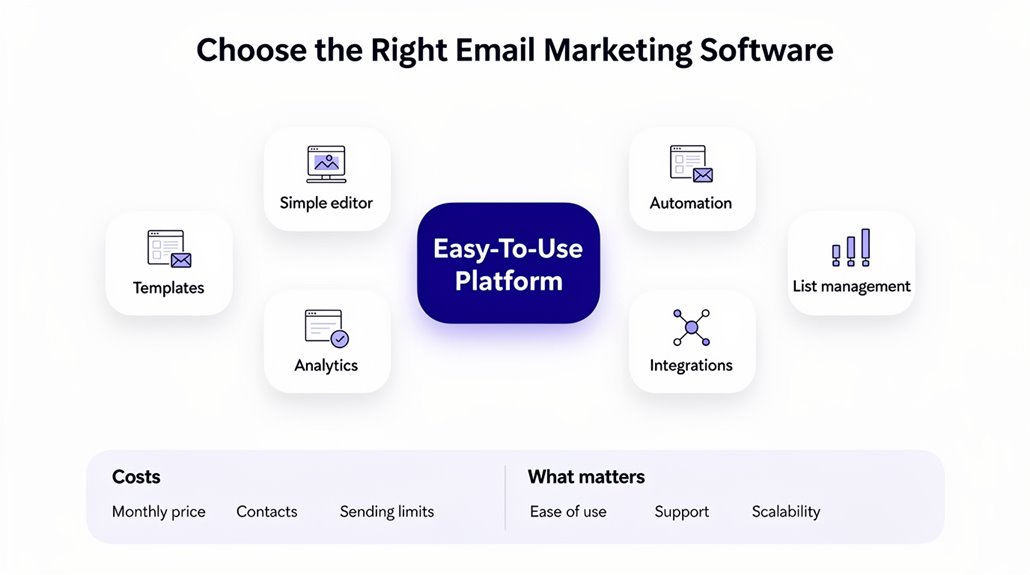
What makes an email marketing platform truly easy to use? It starts with a user-friendly interface that lets you focus on creating rather than figuring out the software. Look for platforms featuring drag-and-drop email builders, so you can design campaigns quickly without needing technical skills. Intuitive onboarding processes are essential too—they guide you through setup smoothly, ensuring you’re not stuck from the start.
You’ll also want accessible templates and plenty of customization options so your emails look professional even if you’re not a designer. Plus, check if the platform integrates well with your existing tools like ecommerce or CRM systems to keep workflows seamless.
Finally, prioritize platforms that offer solid support including tutorials and responsive customer service. These resources help resolve any issues swiftly as you learn, making your email marketing journey easier and more productive right from the beginning.
Choosing the Best Email Marketing Platform for Your Business Type
How do you find an email marketing platform that truly fits your business? Choosing the right platform means matching essential capabilities to your specific needs. The best email marketing platforms cater to different business types, ensuring you get the tools that fuel growth and simplify your workflow.
Consider this when selecting your platform:
- Small businesses and beginners benefit from user-friendly, affordable options like Mailchimp or Brevo that make campaign management simple.
- Ecommerce brands need platforms like Klaviyo or Omnisend with advanced automation and personalization focused on boosting revenue.
- B2B companies require integrated solutions such as HubSpot, combining email marketing with CRM for a thorough customer approach.
How to Prepare for a Smooth Email Marketing Platform Migration
Before switching to a new email marketing platform, you’ll want to thoroughly evaluate your current processes to pinpoint which features to keep or improve. This helps preserve essential capabilities like email marketing automation and customer data. Next, create a detailed migration plan outlining timelines, responsibilities, and key steps to transfer subscriber lists and email templates smoothly. If the new platform offers a trial, test its features with your team to spot issues early and reduce disruptions. Stay in close contact with both your current and new providers during platform migration to address any technical challenges promptly. Once you’ve completed the switch, closely monitor campaign metrics such as deliverability and engagement to guarantee everything runs smoothly. Tracking these indicators helps confirm a successful migration and guides you in optimizing your future campaigns effectively. Preparing carefully like this guarantees your email marketing continues without hiccups and retains the automation you depend on.
Final Tips for Selecting the Right Email Marketing Solution
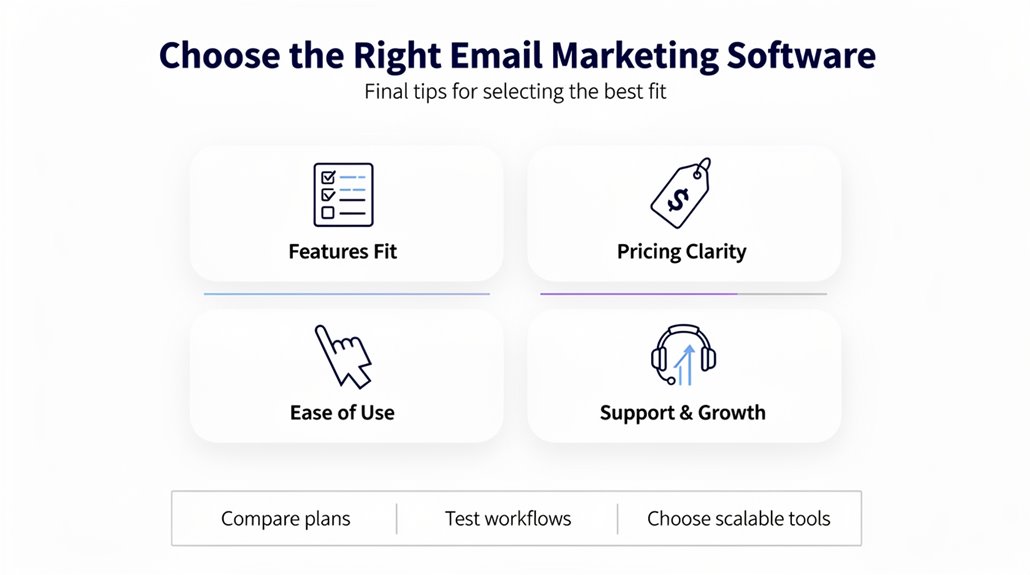
Choosing the right email marketing solution can make all the difference in your campaign’s success and efficiency. To guarantee you pick the best platform, focus on email marketing features that align with your goals, especially automation tools like Advanced Segmentation and A/B Testing, which boost personalization and engagement. Don’t forget to assess the onboarding process—user-friendly interfaces speed up your workflow. Pricing is another key factor, so watch out for escalating costs tied to subscriber limits and feature access. Finally, robust customer support and solid integrations with your existing systems are essential to keep things running smoothly.
Keep these tips in mind:
- Prioritize automation tools and segmentation to enhance campaign effectiveness.
- Look for platforms with intuitive onboarding to save time.
- Check for reliable customer support and seamless integration options.
Frequently Asked Questions
Can I Use Email Marketing Software Without Prior Technical Knowledge?
Yes, you can definitely use email marketing software without prior technical knowledge. Many platforms offer user friendly interfaces that make creating campaigns simple. Automation features help you schedule emails and manage contacts easily, so you don’t have to worry about complex tasks. Plus, reliable customer support is there to guide you whenever you run into issues. With these tools, you’ll get effective results without needing advanced tech skills.
How Secure Is My Subscriber Data With These Platforms?
Your subscriber data’s security depends largely on the platform’s data encryption methods, privacy policies comparison, and user access controls. You’ll want to pick a service that uses strong encryption to protect data both in transit and at rest. Check their privacy policies to understand how they handle your info, and make sure they offer customizable user access controls to limit who can see or manage your subscriber list. This way, your data stays safer.
Do These Tools Support International Email Regulations and Compliance?
Most email marketing tools provide strong compliance features to help you meet international support and legal requirements, like GDPR and CAN-SPAM. You’ll find options for consent management, automatic unsubscribe links, and data handling protocols tailored for different regions. Just make sure to double-check each platform’s details, because their level of international support can vary. Choosing software with these compliance features means you’ll stay secure and avoid legal troubles when emailing subscribers worldwide.
What Are the Best Practices for Avoiding Spam Filters?
To avoid spam filters, you’ll want to focus on creating effective content that’s relevant and valuable to your audience. Use audience segmentation to send targeted emails, which reduces the chance of being flagged as spam. Don’t forget subject line optimization—keep it clear, concise, and free of spammy words. Also, consistently clean your email list and authenticate your domain to improve deliverability and keep your emails landing in the inbox, not the spam folder.
Can I Integrate Email Marketing Software With Social Media Platforms?
Yes, you can definitely integrate email marketing software with social media platforms. Make sure to check platform compatibility to guarantee smooth social media integration. This lets you share campaigns directly on various channels and track engagement across them. By combining email with your social media efforts, you’ll enhance your cross channel marketing strategy, reaching your audience in multiple places and boosting overall effectiveness. It’s a powerful way to expand your reach and engagement.