
How to Choose the Right Sales Funnel Builder: Key Features, Pricing, and Best Use Cases
Looking for the ideal sales funnel builder? Learn which key features and pricing strategies can transform your business growth—discover what truly matters next.
Choosing the right sales funnel builder isn’t just about picking the flashiest tool. You need something that fits your business size, integrates smoothly with your existing systems, and offers automation that actually saves time. Pricing matters too, but it’s the features that can make or break your conversion rates. With so many options available, knowing what to prioritize can feel overwhelming—especially when your growth depends on making the right choice.
What Features Define the Best Sales Funnel Builders
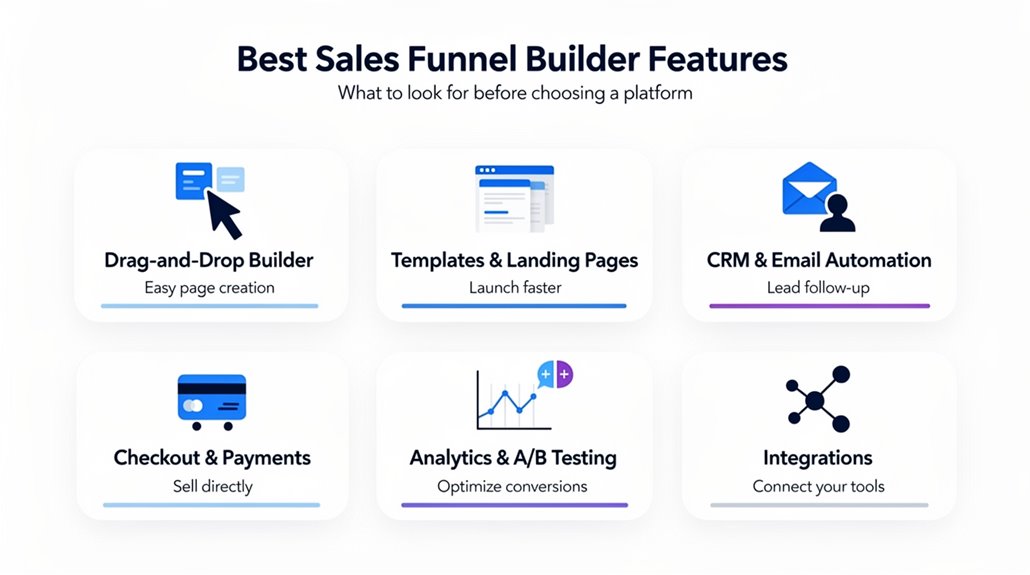
When choosing a sales funnel builder, you’ll want to focus on features that simplify the process and boost your results. The best Sales Funnel Software Tools are user-friendly, offering drag-and-drop funnel customization that makes building your funnels easy to use, even without technical skills. Look for builders whose features include robust automation capabilities like email sequences and lead nurturing workflows—they save time and enhance engagement automatically. Templates give you a head start by providing high-converting designs tailored for your industry, aiding conversion optimization effortlessly. Analytics features are essential, letting you track traffic, conversions, and customer behavior in real-time for smarter decisions. Don’t overlook integration options; they guarantee your funnel connects seamlessly with CRMs and email marketing tools, keeping your data flowing smoothly. Prioritizing these elements means you’ll get a powerful, efficient, and all-encompassing sales funnel builder that grows your business effectively.
How to Match Sales Funnel Builders to Your Business Needs
Matching the right sales funnel builder to your business needs starts with understanding what your company requires most. When matching sales funnel builders, consider these key points:
- Business complexity: Small businesses with basic needs benefit from user-friendly tools like Systeme.io, while advanced firms need robust automation capabilities found in platforms like ActiveCampaign.
- Template library: Choose sales funnel software with customizable, industry-focused templates such as those offered by ClickFunnels or Kartra to streamline your setup.
- Integration capabilities: Ascertain seamless connection with your existing email marketing platform and CRM for a streamlined workflow – platforms like HubSpot excel here.
- Pricing model: While we’ll dive deeper into pricing later, keep in mind that your choice affects affordability and scalability as your business grows.
Comparing Pricing Models for Sales Funnel Builders
When choosing a sales funnel builder, understanding the pricing structure is key to finding the best fit for your budget and goals. You’ll want to weigh the value each plan offers against its cost, especially as your business grows and needs evolve. Comparing subscription fees, one-time payments, and free tiers can help you make a smart, long-term decision.
Pricing Structures Explained
Although choosing the right sales funnel builder might seem overwhelming, understanding the pricing structures behind each option can make your decision easier. Sales funnel software typically uses two key pricing models: subscription-based and one-time payment. Here’s what to weigh:
- Subscription-based models (e.g., Kartra, ActiveCampaign) charge ongoing costs that grow with your lead generation and features.
- One-time payment options like ThriveCart provide predictable, long-term savings without recurring fees.
- Compare estimated costs alongside the feature set and integrations you’ll need to avoid surprise expenses.
- Paid plans often limit contacts or funnels, so evaluate scalability relative to your business growth.
Knowing these distinctions helps you pick a sales funnel builder that aligns with your budget and marketing goals.
Value Versus Cost
Understanding pricing structures is just one piece of the puzzle when choosing a sales funnel builder. To truly weigh value versus cost, you need to compare pricing models carefully. Freemium options like Systeme.io offer a low barrier to entry, but premium plans such as Keap, starting at $299/month, bring advanced automation capabilities and CRM integration that could boost your ROI. Subscription models like ClickFunnels may seem affordable initially but can grow costly as your contacts increase. Alternatively, lifetime access options, like ThriveCart’s one-time payment, present significant long-term savings. Factor in included features—A/B testing, automation, and CRM integration—to measure the effectiveness of each dollar spent. By balancing these elements, you’ll select a builder that aligns with your budget while maximizing growth potential.
Why Ease of Use Matters in Funnel Builders
Since ease of use directly impacts how quickly you can create and launch effective sales funnels, choosing the right builder is essential. The best funnel builder software offers user-friendly features that let you focus on driving results instead of technical hurdles.
Here’s why ease of use matters:
- Drag and drop interfaces make visualizing and adjusting your funnel simple without coding skills.
- Pre-designed templates tailored to your niche speed up building high-converting landing pages.
- Intuitive navigation reduces the learning curve, increasing team collaboration and efficiency.
- Simplified tools improve adoption rates, helping your marketing automation run smoothly and boosting effective sales.
How Automation Features Boost Your Sales Funnel
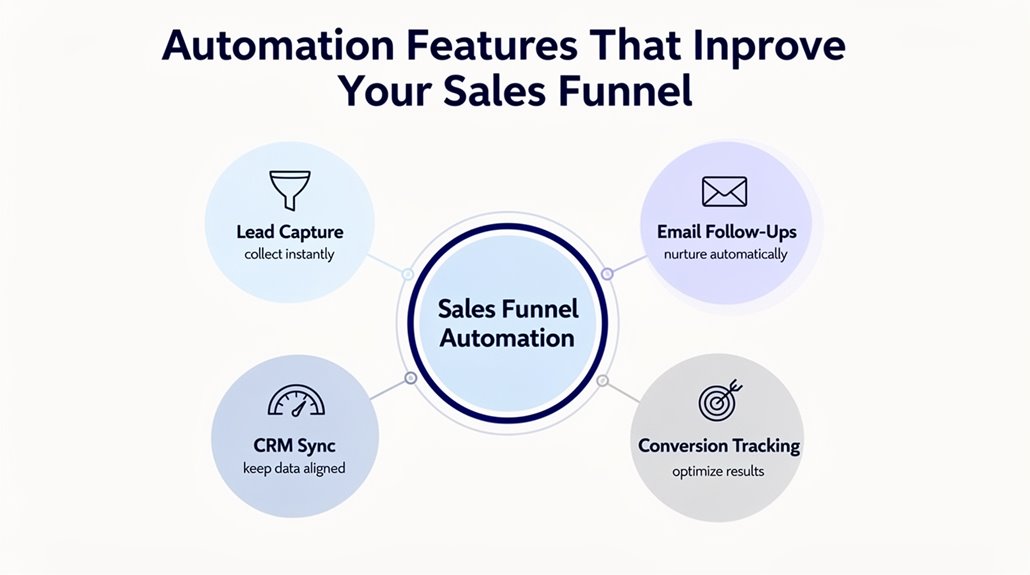
Beyond ease of use, automation features in sales funnel builders can transform how you manage and scale your marketing efforts. With automation, your sales funnel software handles repetitive tasks like email automation, freeing you to focus on strategy. Automated workflows trigger personalized marketing based on user behavior, boosting lead generation and engagement at critical moments. This targeted approach enhances conversion rates by nurturing prospects with timely content tailored to their needs. Seamless integration with other tools guarantees consistent communication across touchpoints, making your marketing campaigns more cohesive and effective. Plus, automation streamlines A/B testing, letting you quickly optimize funnel elements for better results. By leveraging these features, you create a smarter, more efficient sales funnel that adapts to your audience dynamically. Embracing automation in your sales funnel builder isn’t just about saving time—it’s about driving higher conversions and smarter growth with less effort.
CRM and Analytics Tools for Sales Funnels
When you integrate CRM and analytics tools with your sales funnel builder, you gain a powerful way to track and manage every step of your customer’s journey. CRM tools help you organize contacts, track lead progress, and enable advanced segmentation for targeted lead nurturing. Meanwhile, analytics tools provide real-time insights into conversion rates, customer behavior, and traffic sources to support data-driven decision-making.
Here’s how CRM and analytics enhance your sales funnel:
- Track and manage interactions across the sales process for efficient lead nurturing.
- Use segmentation and tagging to personalize communications and improve engagement.
- Access reporting functionalities to analyze revenue generation and sales velocity.
- Leverage real-time data to optimize funnel performance and boost conversion rates.
Combining these tools empowers you to make smarter decisions that increase efficiency and drive higher revenue generation.
Best Sales Funnel Builders for Beginners?
Wondering which sales funnel builder is best for you as a beginner? Systeme.io stands out with its generous free plan, letting you build funnels for up to 2,000 contacts without upfront costs. You’ll appreciate its simplicity and extensive features. Kartra offers a user-friendly interface and compelling funnel templates, perfect if you want to manage your marketing in one spot—plans start at $99/month with a 30-day trial. GetResponse combines automated sales funnels with email marketing and integrates with 170+ tools, making it efficient for beginners. Perspective’s intuitive drag-and-drop editor and mobile-first design help you launch high-converting funnels easily, with pricing starting at $62/month annually. Leadpages specializes in landing page builders with varied templates tailored for small businesses, starting at $49/month. All these options balance pricing, usability, and features so you can focus on growth rather than complexity. These best sales funnel builders guarantee a smooth start with essential tools and user-friendly designs.
Choosing the Best Sales Funnel Builder for Your Growth Goals
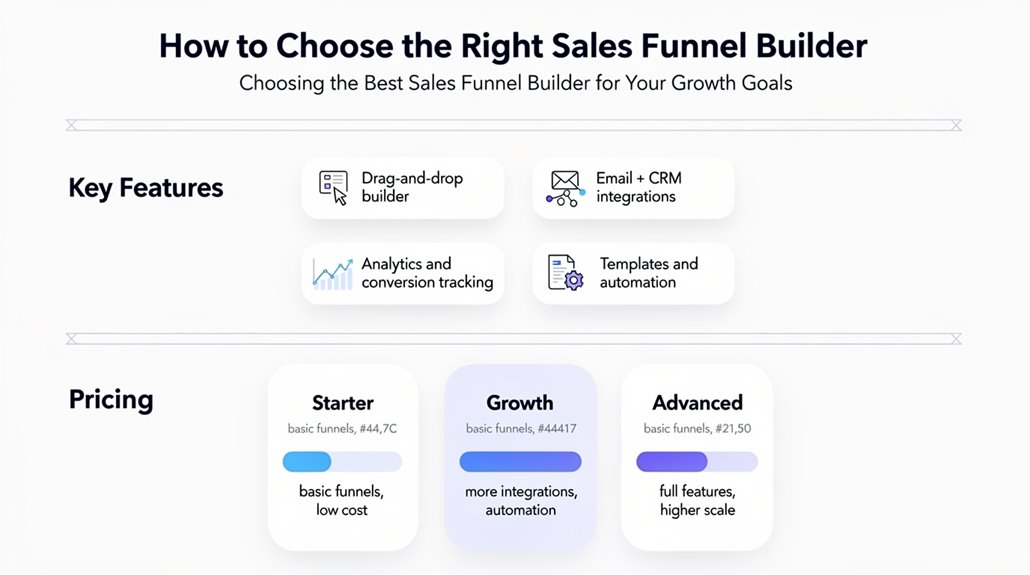
To choose the best sales funnel builder for your growth goals, focus on core features like drag-and-drop design, automation, and analytics. Make sure the pricing structure fits your budget, whether that’s a subscription or a one-time payment. Finally, pick a tool that aligns with your specific business type and marketing needs for smooth scaling.
Evaluating Core Features
How do you choose the right sales funnel builder that aligns with your growth goals? Focus on core features that directly impact your success. Here’s what to evaluate in sales funnel tools:
- Intuitive drag-and-drop funnel building with customizable templates to speed up setup and improve conversion rates.
- Automation tools supporting email marketing automation and lead nurturing, so you engage customers efficiently without manual work.
- Robust analytics and A/B testing capabilities to track funnel performance and optimize key metrics for better results.
- Integration options with your CRM and other marketing platforms, ensuring seamless data flow and consistent customer experiences.
Prioritizing these features will help you select a funnel builder that complements your growth strategy and maximizes ROI.
Aligning Pricing Structures
Although choosing a sales funnel builder with the right features is essential, aligning its pricing structure with your budget and growth expectations is equally important. When selecting sales funnel software, examine pricing structures carefully—some offer flexible pricing and tiered plans, letting you start small and upgrade as needed. Consider scalable pricing plans that accommodate anticipated growth without sudden cost spikes. For example, Systeme.io offers a free plan, while others like Keap start much higher, impacting budgeting. Also, check pricing models for fairness, such as those based on funnel volume instead of contact counts, which can affect your total cost of ownership. Always factor in extra fees for integrations or premium features to avoid surprises in long-term expenses.
Matching Use Cases
Choosing the right sales funnel builder ultimately depends on what you want to achieve with it. Matching your goals to the best use cases guarantees you pick the right sales funnel software.
- Startups benefit from Systeme.io’s free plan and essential funnel functions, perfect for lead capture without high pricing.
- Businesses focused on email automation will prefer GetResponse’s complete marketing suite for an integrated approach.
- E-commerce businesses should lean towards ThriveCart or SamCart to leverage advanced features like checkout optimization and abandoned cart recovery.
- If you value user-friendly software with quick setup, ClickFunnels offers broad templates, though it comes with higher pricing.
ActiveCampaign excels when you’re aiming to optimize the customer journey through robust email automation and engagement tools.
Frequently Asked Questions
What Is the 10 3 1 Sales Rule?
The 10 3 1 sales rule means for every 10 prospects in your sales funnel, 3 qualify as leads, and 1 converts to a sale. It’s an essential sales strategy that boosts lead generation and enhances customer engagement. By focusing on funnel optimization and marketing automation, you can improve conversion rates and sales tracking. This rule helps you map the buyer journey effectively, analyze funnel metrics, and refine your sales strategies for better results.
What Is the Best Sales Funnel Builder?
The best sales funnel builder depends on your needs, but Systeme.io shines for pricing flexibility, user friendly interfaces, and template variety, great for startups. If you’re focused on conversion rate optimization and want solid A/B testing tools, ClickFunnels is solid—though pricier. For exceptional tracking and analytics, plus integrations and plugins, ActiveCampaign fits well. Don’t forget mobile responsiveness features and customer support options to boost your sales funnel strategies effectively.
What Funnel Builder Are You Most Familiar With?
I’m most familiar with ClickFunnels because it offers a great funnel comparison, balancing user experience with a wide template variety. Its pricing models are straightforward, and the integration options cover most needs. You’ll appreciate their strong customer support and mobile optimization, plus powerful analytics tracking and A/B testing. ClickFunnels also excels in sales automation, making it a solid choice if you want an all-in-one platform that’s easy to navigate and reliable.
What Are the 7 Stages of the Sales Funnel?
The seven stages of the sales funnel start with the Awareness stage, where you focus on generating Interest through targeted content. Next, the Decision making phase helps leads evaluate options. Action prompting encourages them to purchase. Then, lead nurturing builds lasting relationships, while Customer retention keeps clients loyal. Upsell strategies and referral programs maximize value. Throughout, conversions tracking guarantees marketing alignment, helping you optimize each step effectively.